Goebbels’ house, just as he left it
The last standing house of the Nazi leaders
I’ve always been fascinated by history, and I belong to those who insist it must never be forgotten—especially the dark period of World War II. The human cruelty and the suffering of millions of people and their families must not fade from memory, nor should it be questioned by deniers. When I had the chance to visit the last standing house of the Nazi leader Joseph Goebbels, I didn’t hesitate for a moment. I would be standing in the very place where history was written. I would walk the same halls once traversed by some of the most powerful—and simultaneously brutal—men of that era, men who showed no mercy even to the smallest and most defenseless. I would see the rooms that hosted lavish parties, opulent celebrations, distinguished artists, and film stars. Perhaps I would be just a step away from the desk where Goebbels crafted his fiery speeches.
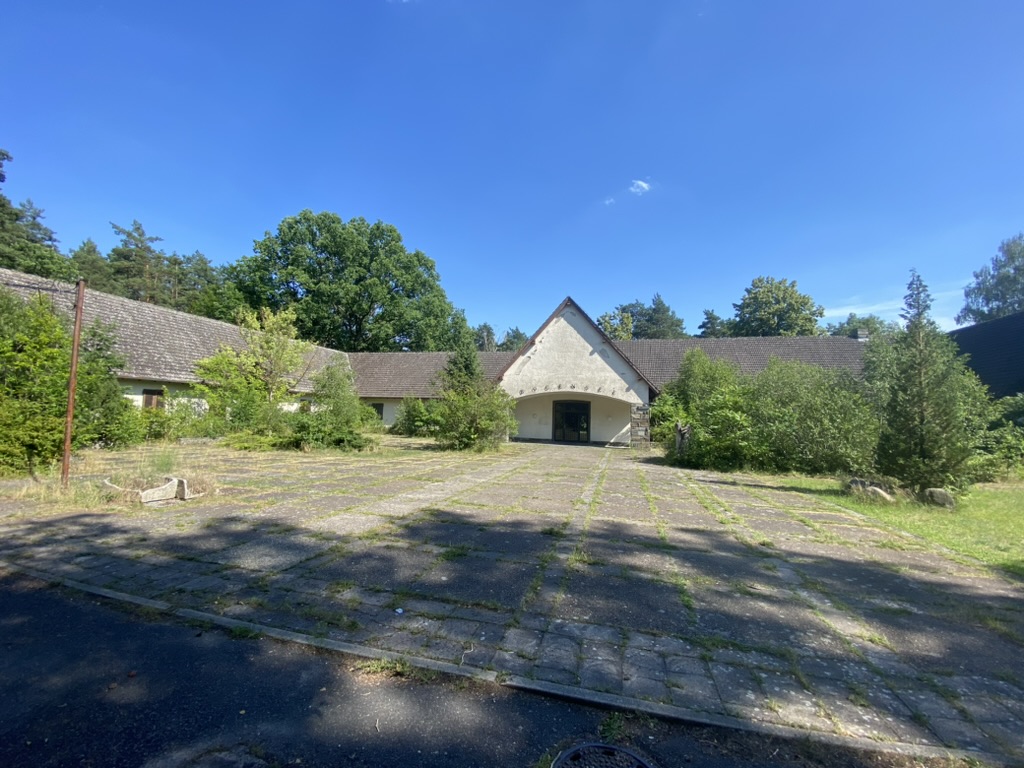
Goebbels’ house, primarily used as a country residence, stands secluded in the woods, away from major roads. This makes it an even more mysterious hideaway, and I must admit that on site, I felt a mixture of revulsion and curiosity, alongside a genuine interest in the house’s history. What was it like to be a prominent guest of Joseph Goebbels, arriving at one of his wild parties? How did Lída Baarová and others feel as they moved through Goebbels’ bedroom? Did they fully grasp who the man was, offering champagne in such a luxurious setting? It’s a shame the walls of the house cannot tell their story. All we can do is capture them in photographs and imagine what kind of companion, friend, husband, or secret lover Goebbels may have been.
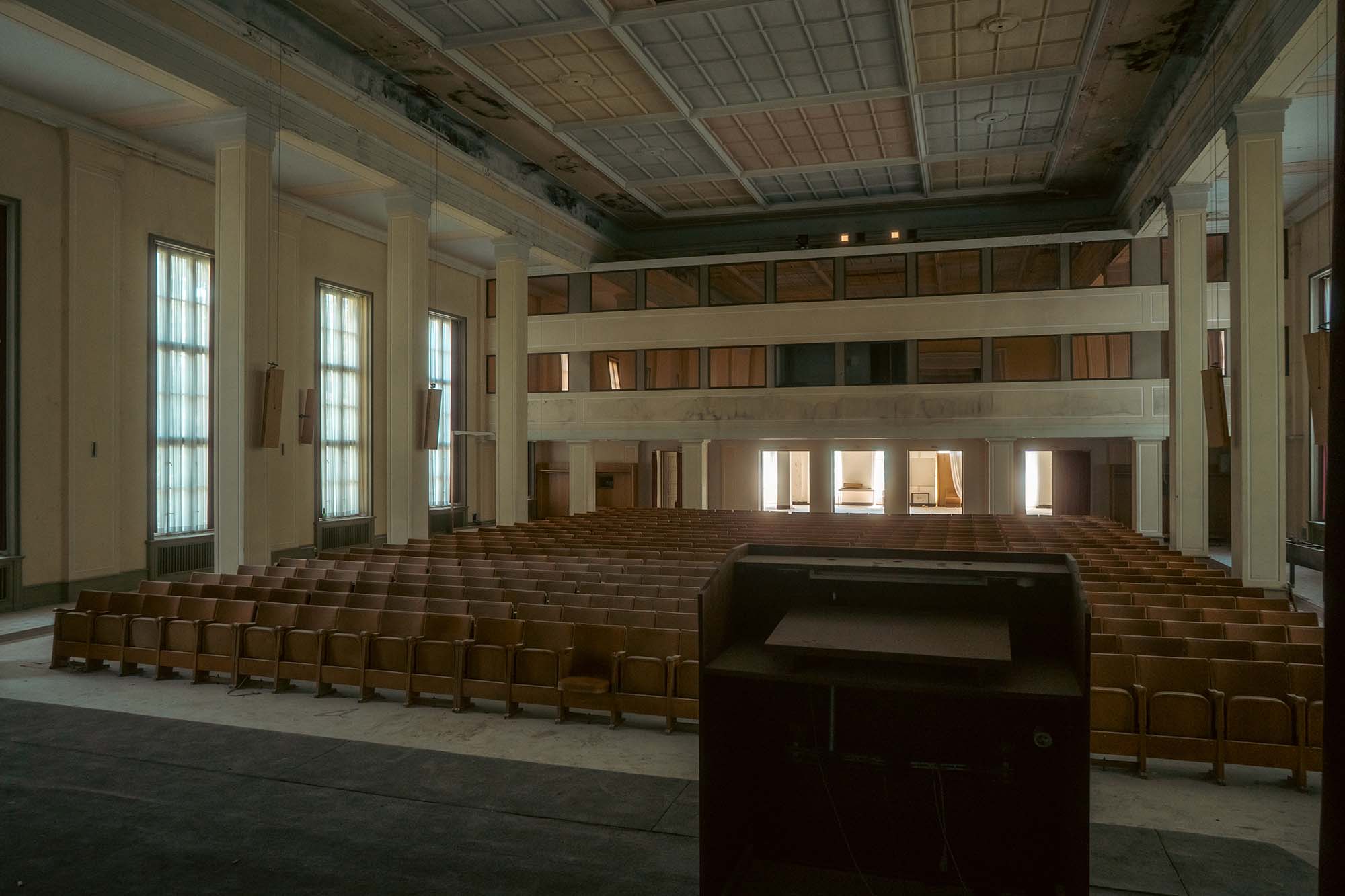
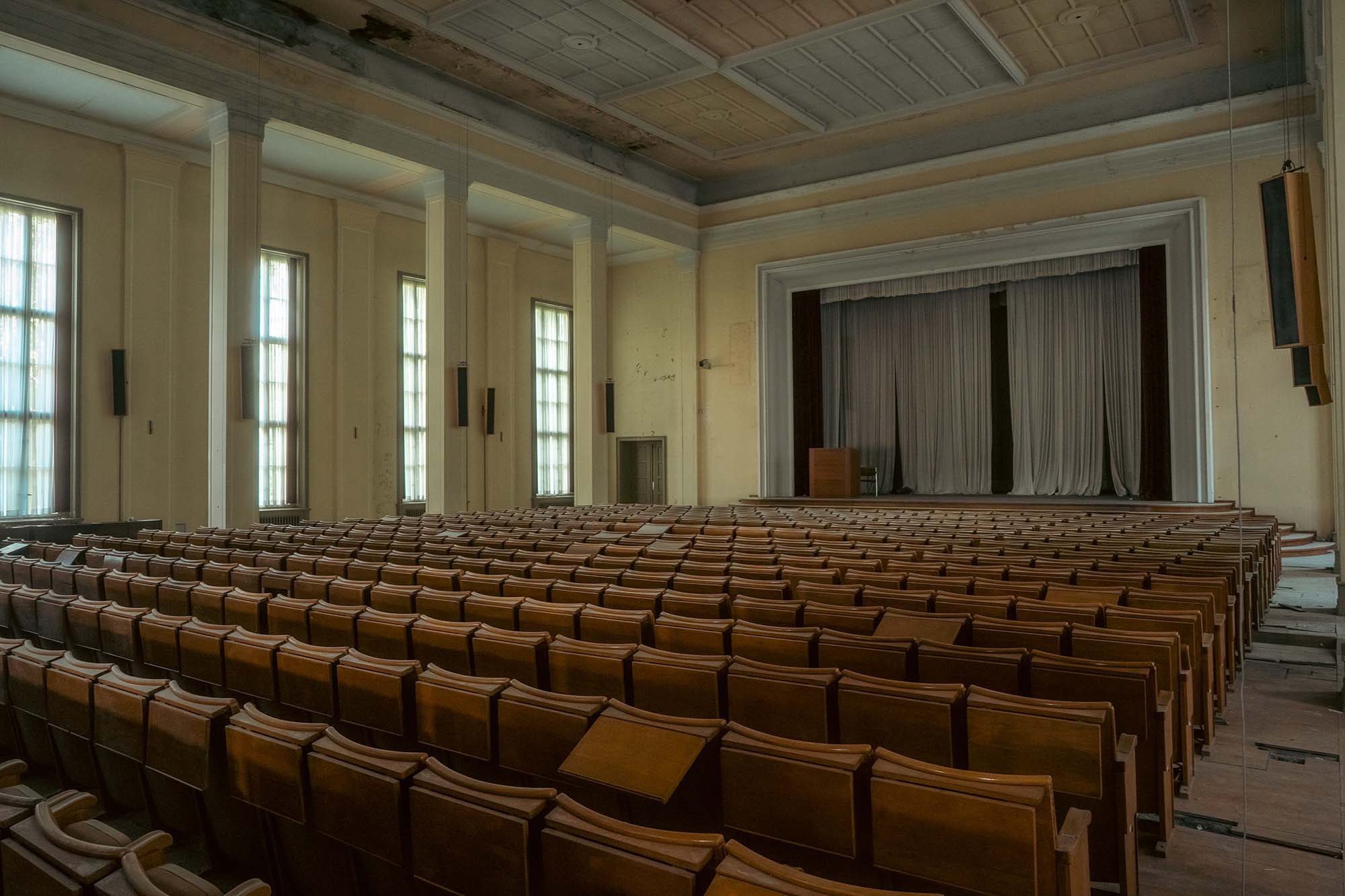
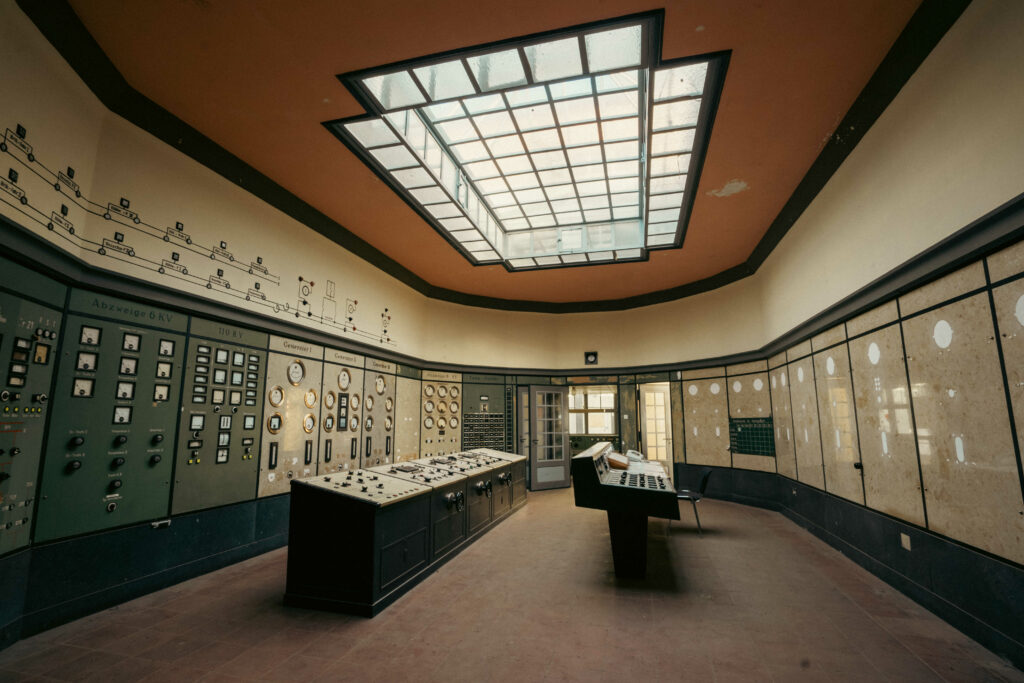
Today, the house stands as an abandoned and silent monument to the era, preserved only because after World War II it was used as a center for Soviet youth and later housed a university. This use spared it from destruction and decay. Nearby, there were also abandoned administrative buildings that long bore further reminders of the Nazi past. Until recently, one stairwell ceiling still bore a Nazi swastika—but that is another story, one deserving its own telling.
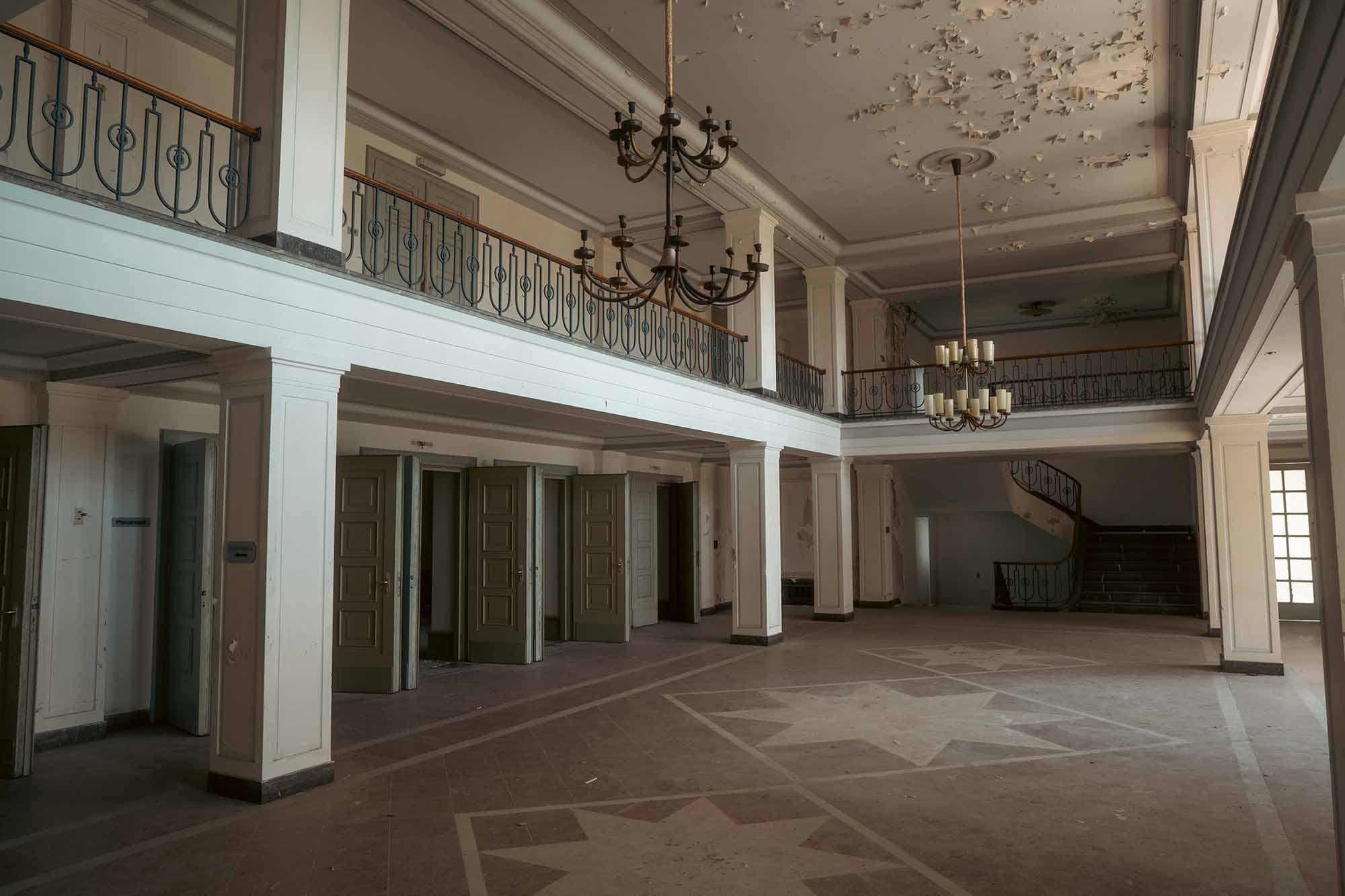
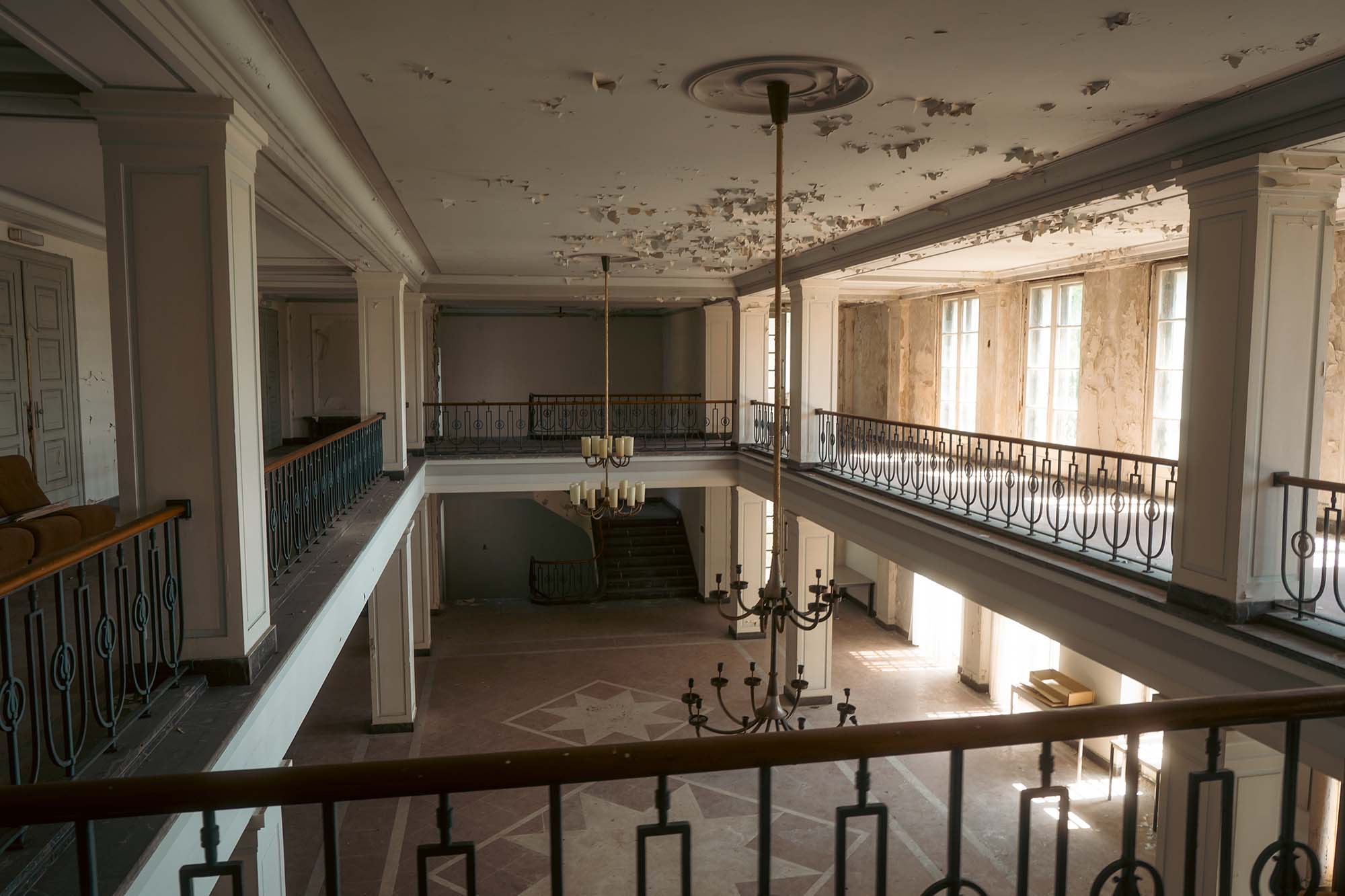
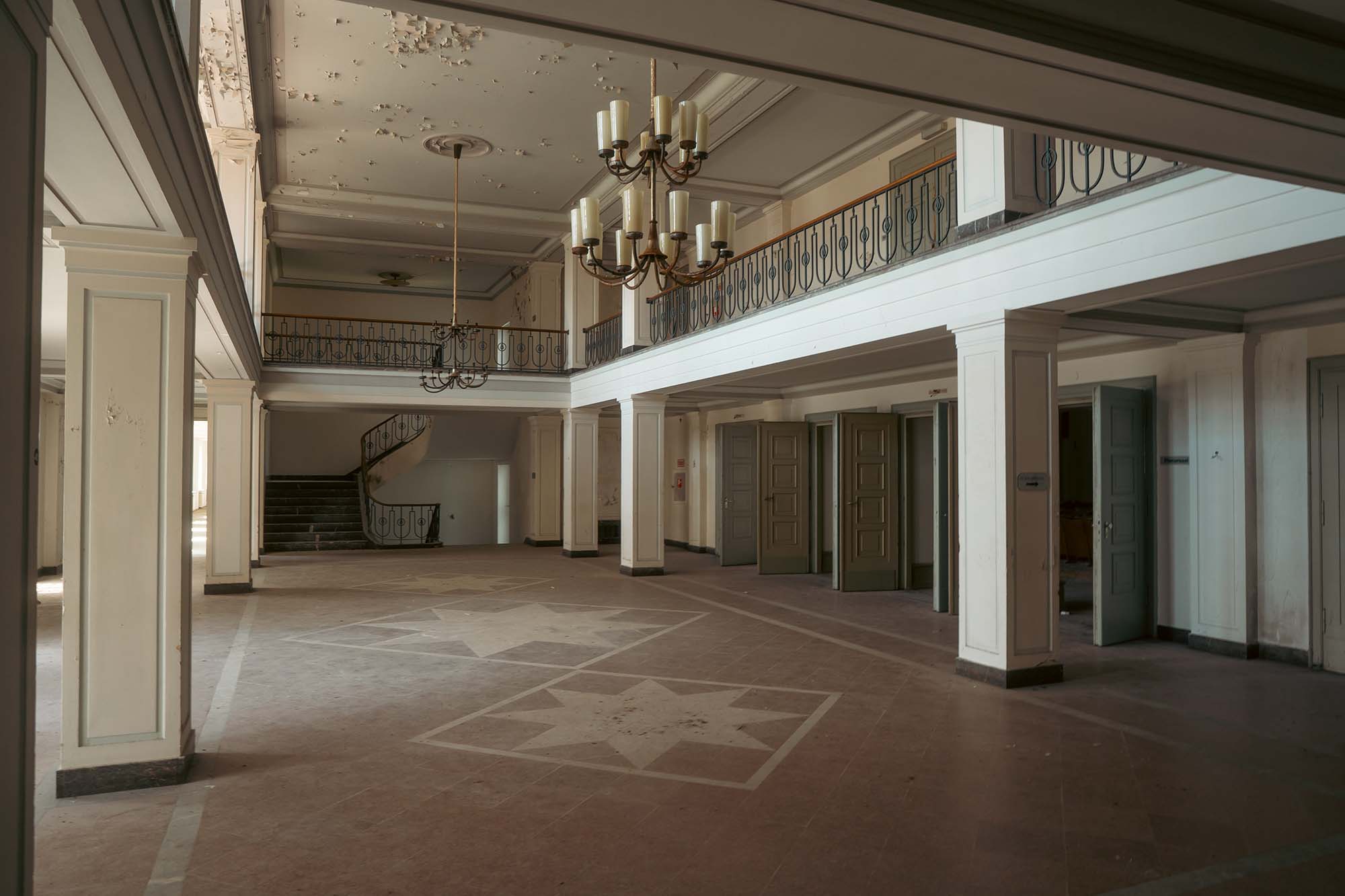
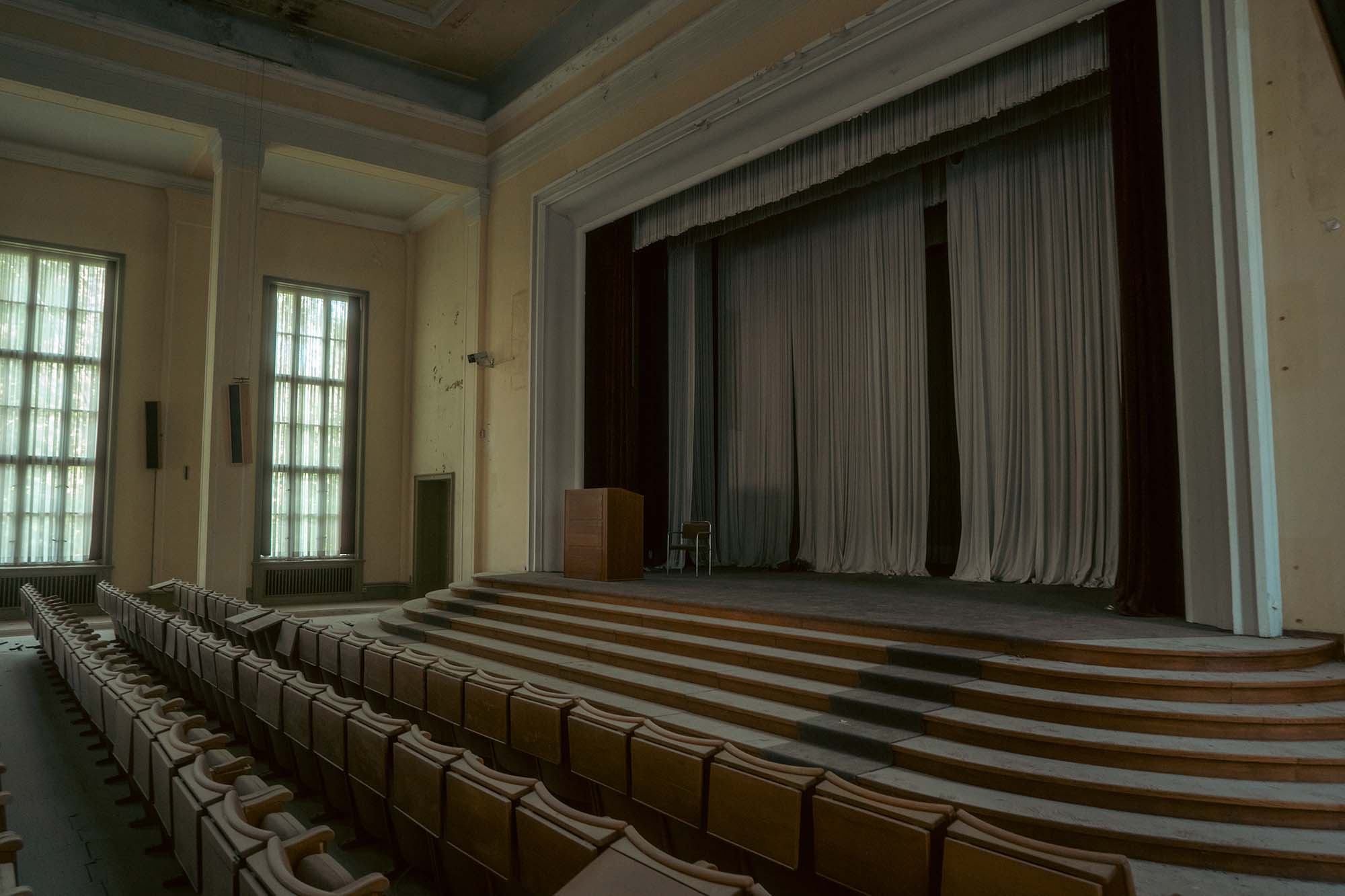
Once a venue for parties, later a training center
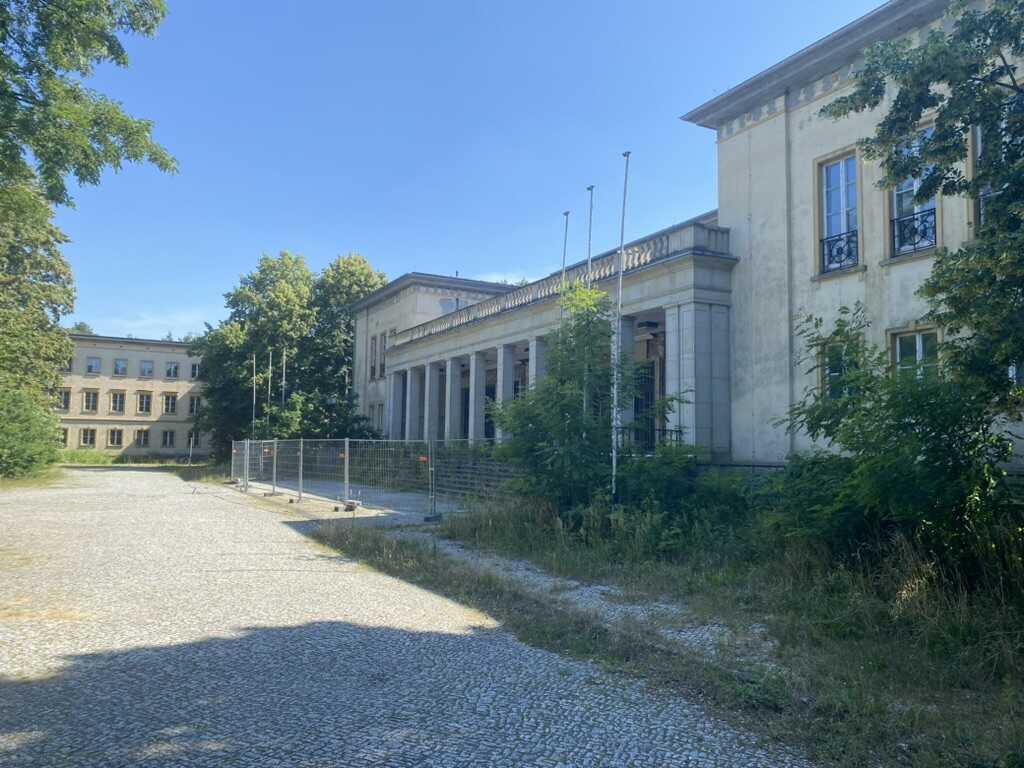
The house stands in a beautiful and peaceful location. Later, on the expansive grounds, the Soviets built a large administrative complex that served youth indoctrinated in communist ideals. The austere buildings, designed to accommodate thousands of visitors, barely fit into the picturesque landscape. In these massive structures, young people from all over the world were educated to become proper members of the Communist Party. Large lecture halls, dormitories, support facilities, and administrative offices hosted hundreds of guests each year. In this romantic and scenic setting, two centers of completely different totalitarian ideologies meet—each driven by a relentless vision of creating a “better world” according to its own ideals, accompanied by a ruthless pursuit of power enforced with extreme cruelty.
We were fortunate. Upon arrival, we found a piece of forgotten scaffolding, an old lightning rod, and a poorly closed window. We were able to get inside without any complications. At the time, the complex had no surveillance cameras or security systems, giving us a unique opportunity to explore countless hidden corners.


Joseph Goebbels’ villa in the woods near Lake Bogensee
The villa served Joseph Goebbels as a country residence; he often escaped here from Berlin and had the villa modified to accommodate dozens of guests and provide them with perfect comfort. Goebbels received the villa as a gift from the city of Berlin. It’s no secret that, beyond the wild parties, it also concealed his numerous extramarital affairs. He spent many occasions here with Lída Baarová, over whom he even considered divorcing. Their turbulent relationship, lasting less than two years, was only ended by Adolf Hitler after an intervention from Goebbels’ wife, Magda. It was unacceptable for such a high-ranking official—though nicknamed the “poison dwarf”—to lead a semi-public extramarital life.
Goebbels, along with Magda and their six children, moved into the villa only after 1944, for a brief period before following the Führer into the devastated city of Berlin.
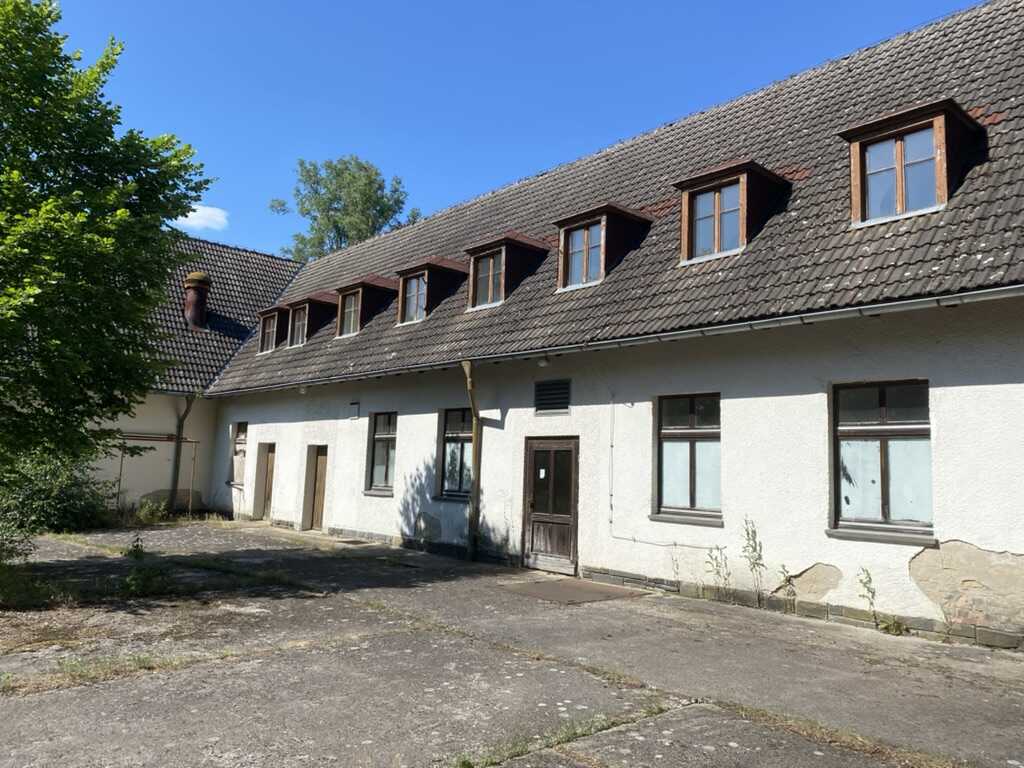
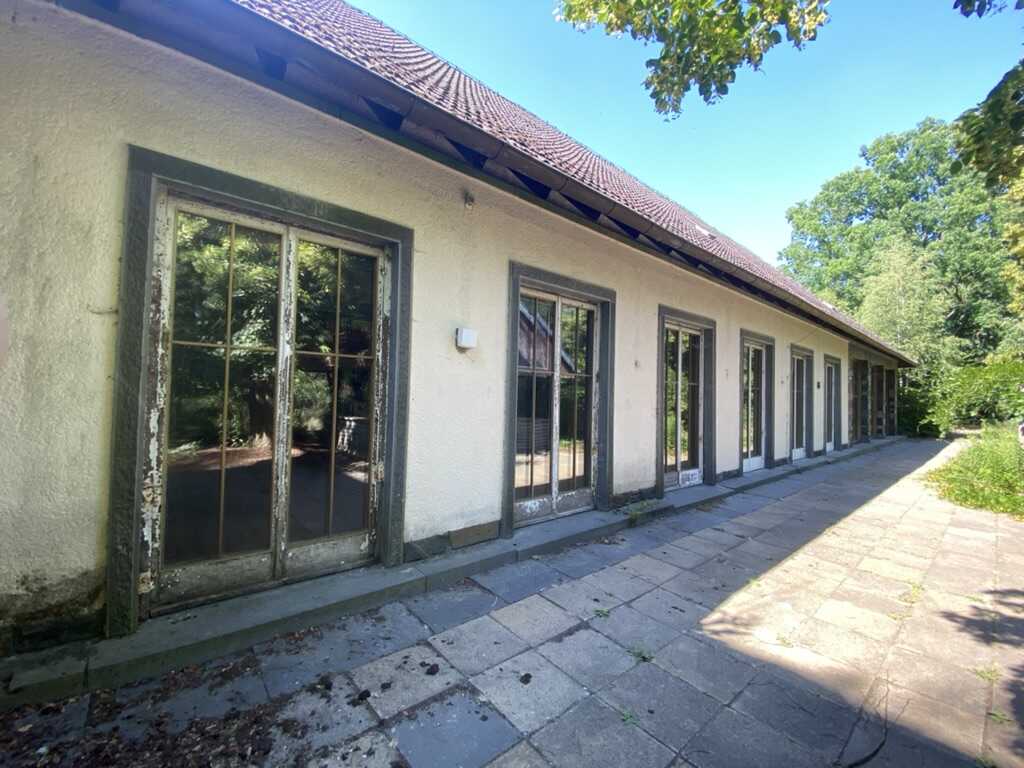
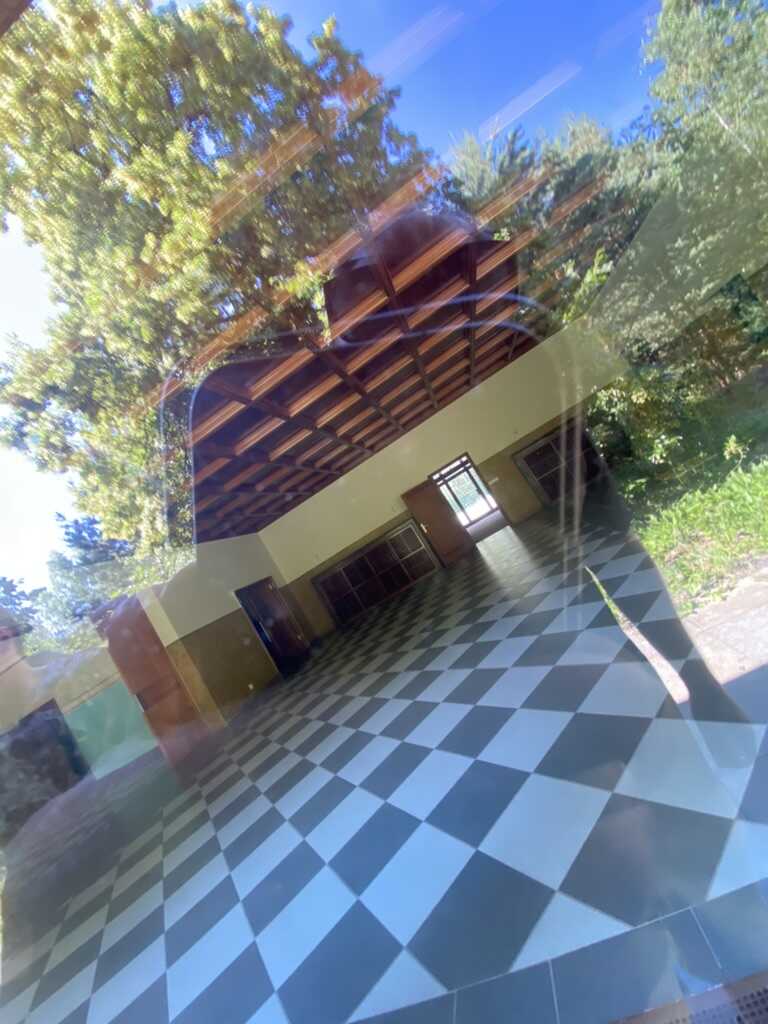
Unfortunately, we couldn’t enter the villa itself because it was secured. Large windows, however, allowed us at least a glimpse into the empty rooms. The house had been completely cleared—no furniture, just bare walls. Looking through the large windows, I wondered whether any original pieces belonging to the Goebbels family had survived, or if I was seeing furnishings that served Soviet and German youth. But just closing your eyes for a moment, you can imagine the lavish parties of the Nazi elite, film stars, favorite singers, and scantily clad dancers. They moved through the rooms, surrounded by luxury, while hundreds of thousands were dying outside. You can even find traces of barracks once used by Goebbels’ personal guards.
A touch of the past
We carefully hid the car in the forest so that the Czech license plate wouldn’t attract unwanted attention. Taking the longer route back to the car, we walked in silence, overwhelmed with impressions and mixed emotions. Our somber thoughts were suddenly broken by the strange sound of an approaching vehicle.
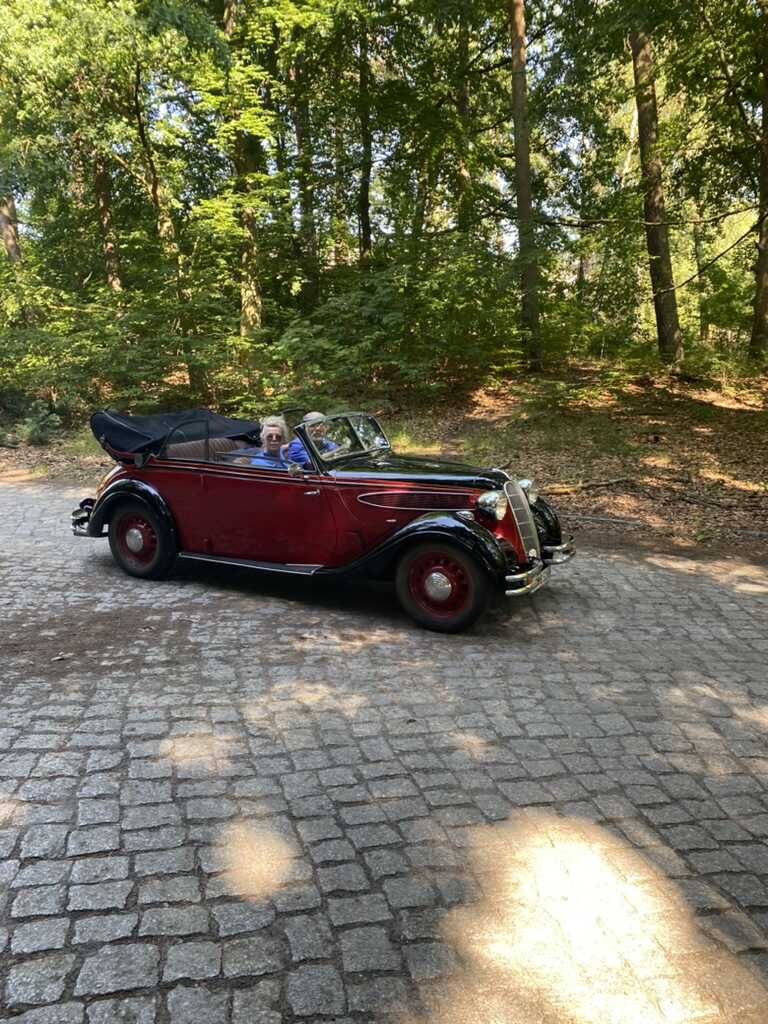
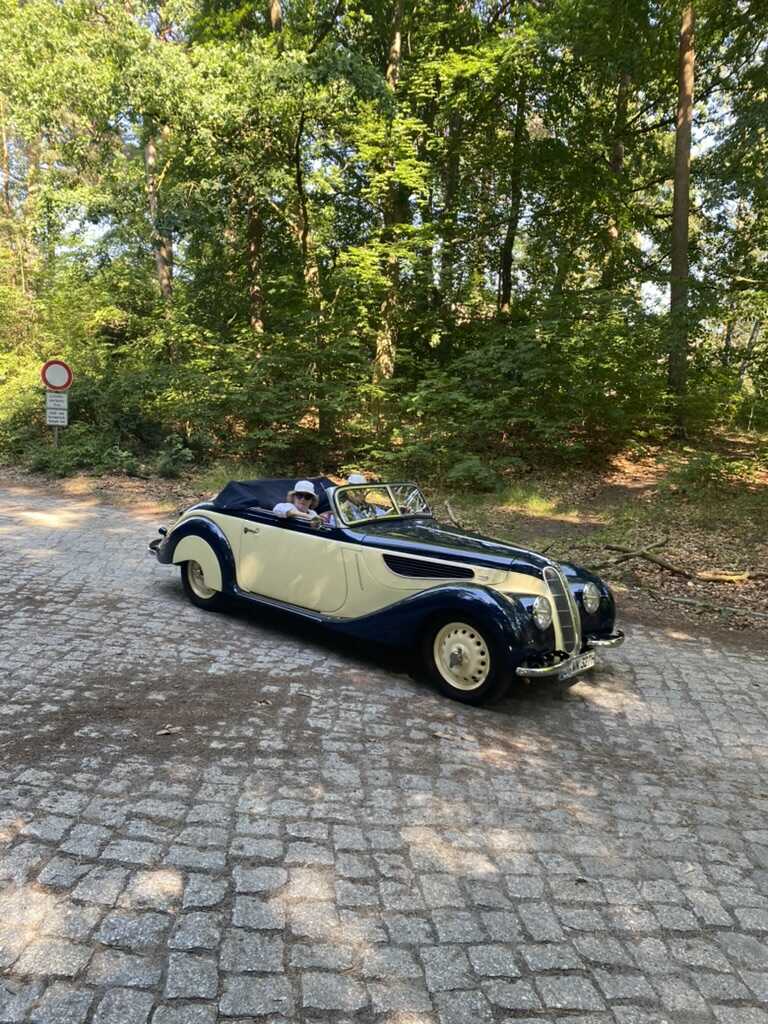
If we had been silent until then, we now stood in speechless awe, chills running down our spines. How was it possible that we were suddenly seeing two vintage cars from the 1930s? Why now, and why here? It felt as if we had stepped into a strange time loop, transported decades back. Once again, Germans were passing by in polished cars. The sight of their perfectly maintained vehicles, styled to reflect the wartime era, was unbelievable. For a moment, we just stood and watched, feeling as if the spirit of the past had come alive before us.
Comments are closed.